Notes:
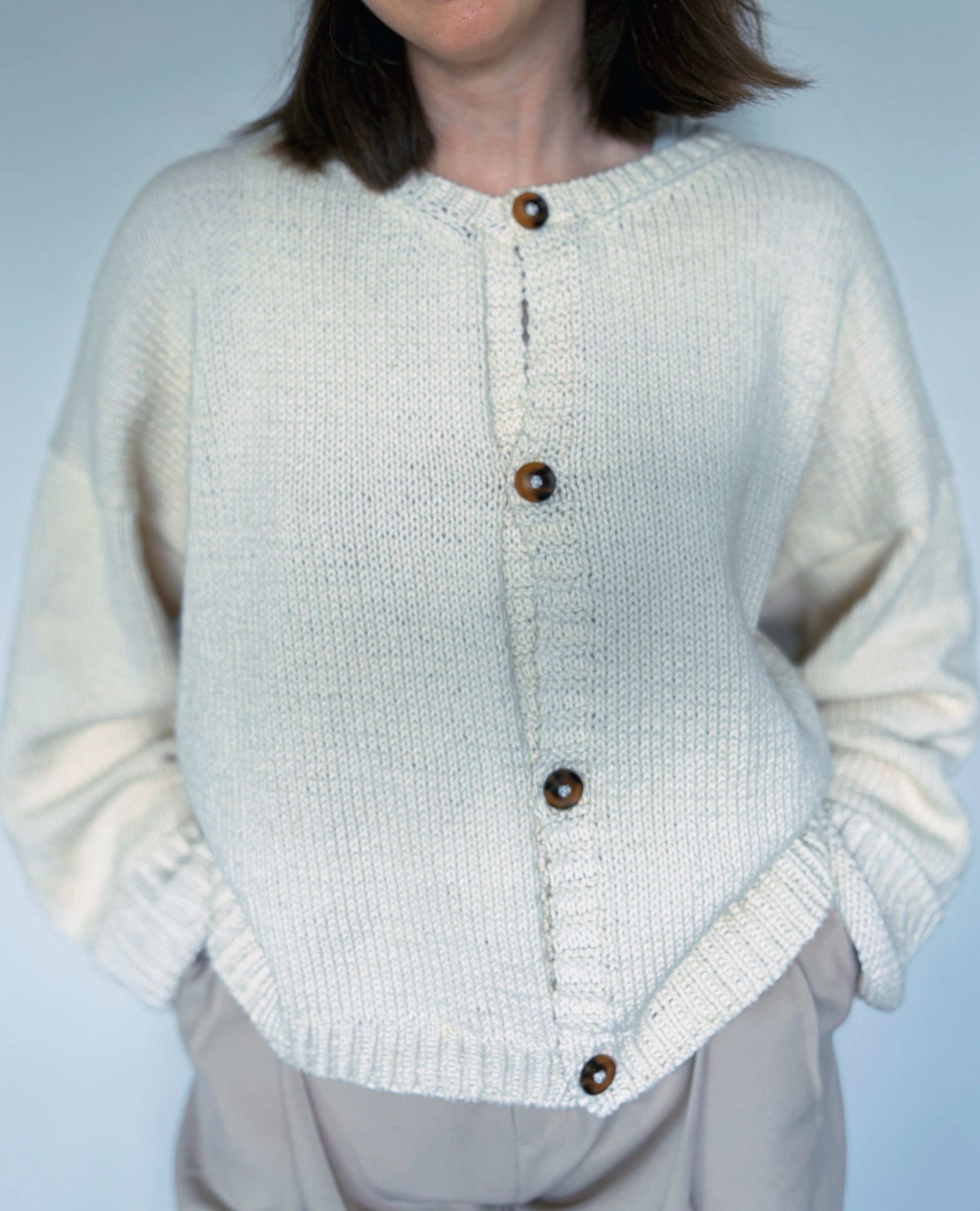
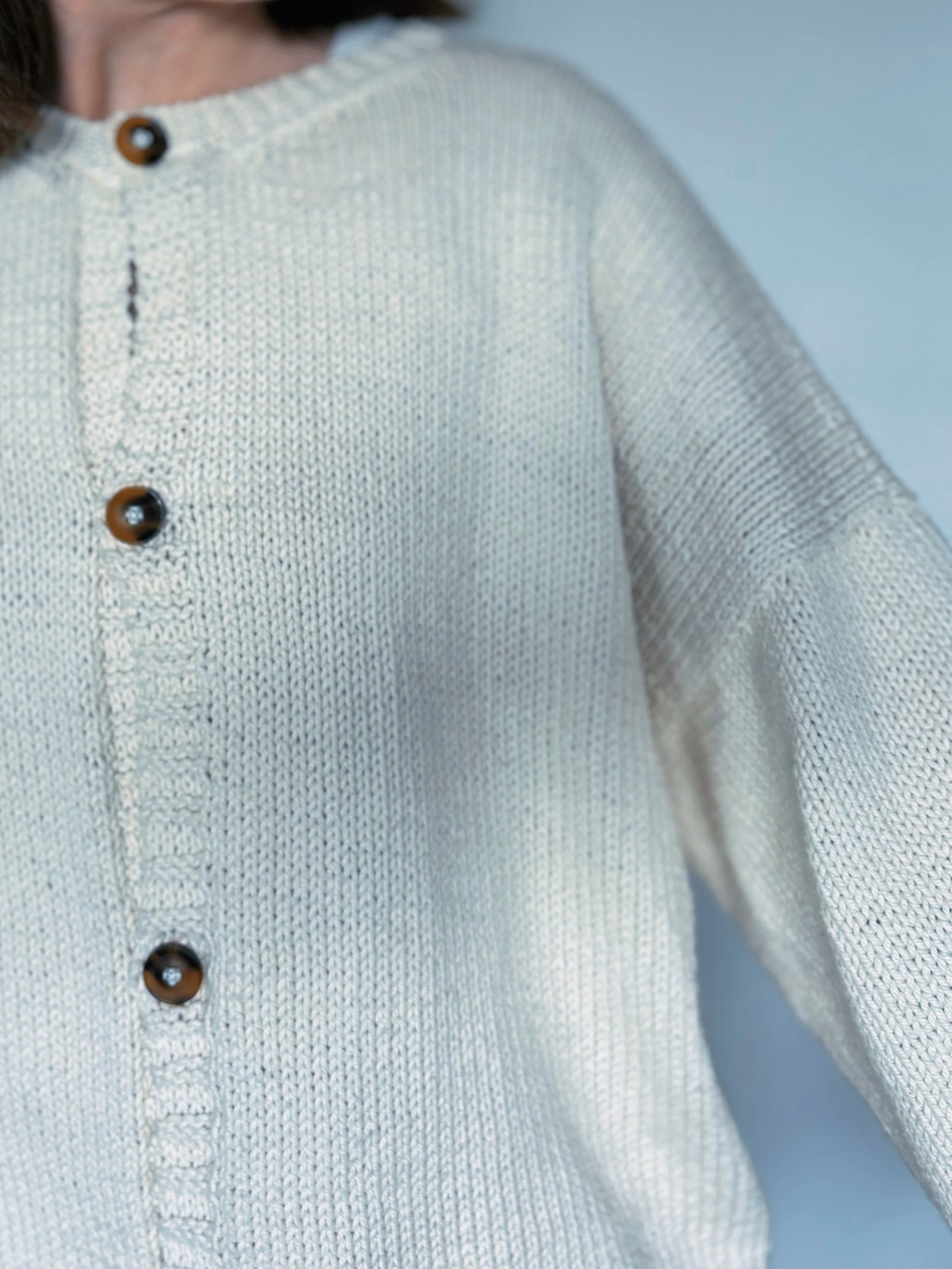
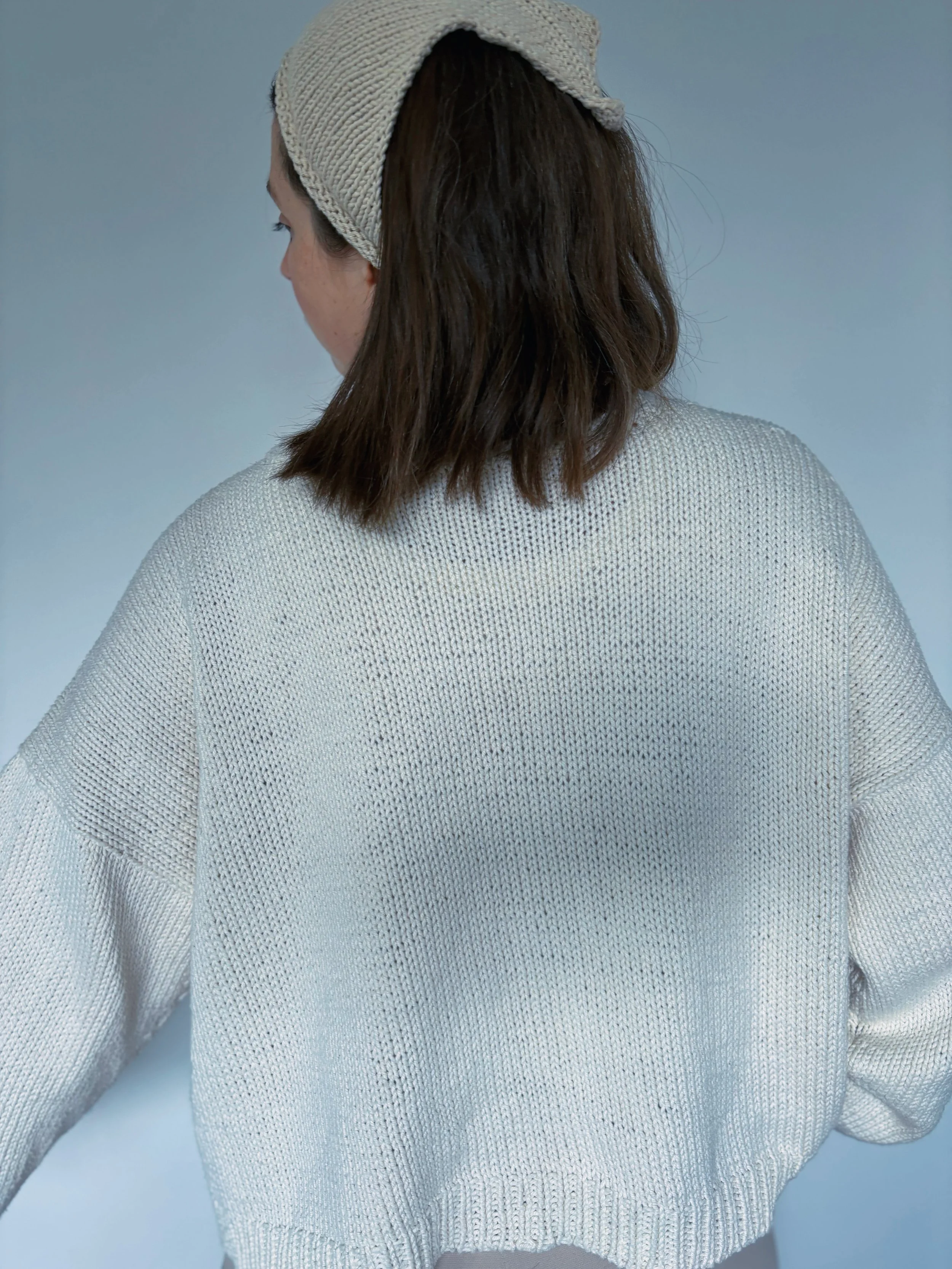
The Vitelotte Sweater is an optional turtleneck or crew, worked in the round from the bottom up, divided at the underarm, and then worked back and forth separately across the back and front panels. The shoulders are shaped with short rows and seamed with a three needle bind off. The collar is picked up and worked in the round, and the sleeves are picked up at the armhole and worked down with regular decreases along the underarm. Both the collar and the cuffs are finished with two rows of double knitting and a stretchy Italian bind off, which keeps the edges elastic enough to pull on and off comfortably.
It's big but straightforward, and perfect for commuting or a boring meeting project. You won't want to take it off when you're done!
Finished chest circumference: 105.5 (110, 114.5, 119, 123.5, 128) cm / 41½ (43¼, 45, 46¾, 48½, 50¼)″
Finished length (measured from the middle of the back, including the hem, not including the collar): 48.5 (51, 53.5, 56, 58.5, 61) cm / 19 (20, 21, 22, 23, 24)″
Gauge: 18 sts / 22 rows = 10 cm / 4″ in stockinette on a 5 mm / US 8 needle, after blocking
Needles: 4 mm (US 6): 40 cm / 16″ circular or DPNs, and 60 cm / 24″ or longer circular. 5 mm (US 8): 60 cm / 24″ or longer circular, plus DPNs or your preferred small-circumference method for the sleeves. 3.5 mm (US 4): DPNs or short circular for the cuffs.
Yarn: 460 (510, 560, 610, 660, 710) g of Cascade Eco+ (478 yd / 437 m per 250 g skein) — 2 (3, 3, 3, 3, 3) skeins — or another yarn that achieves the right gauge.
A note on the yarn: Cascade Eco+ is labelled bulky, but it sits at the light end of that category and behaves much like an aran weight — which is why the gauge here is firmer than a bulky ballband would usually suggest. If you are substituting, a heavy aran or a light bulky will likely get you to this gauge most easily. Always swatch and block your swatch before you commit (or at least check before you've gone too far!!!).
Notions: Stitch markers, stitch holders or waste yarn, tapestry needle.
***Ease and Choosing Your Size***
This sweater is meant to be worn oversized, but not by the same amount in every size. The ease is graded: it runs from about 23 cm / 9″ of positive ease at XS down to about 10 cm / 4″ at XXL. The “to fit bust” column in the table above already accounts for this, so the simplest approach is to find your bust measurement in that column and knit the size beside it.
The reason for grading the ease rather than fixing it is mostly construction. This is a drop-shoulder sweater, so the number of stitches around the body also sets how wide the shoulders are and how deep the armhole falls. Adding the same generous ease at every size would push the shoulder seam steadily further down the arm and drop the underarm lower as the sizes grow, which is where an oversized sweater starts to feel like it is wearing you rather than the other way around. Tapering the ease keeps the shoulder line and the armhole sitting in roughly the same place across the whole size range.
None of this is a rule. If you love a very roomy fit, size up; if you want something with a bit more shape to it, size down. The finished chest measurement is the number that tells you what you are actually knitting, so if you already have a sweater you love the fit of, measure it flat across the chest, double it, and pick the size closest to that.

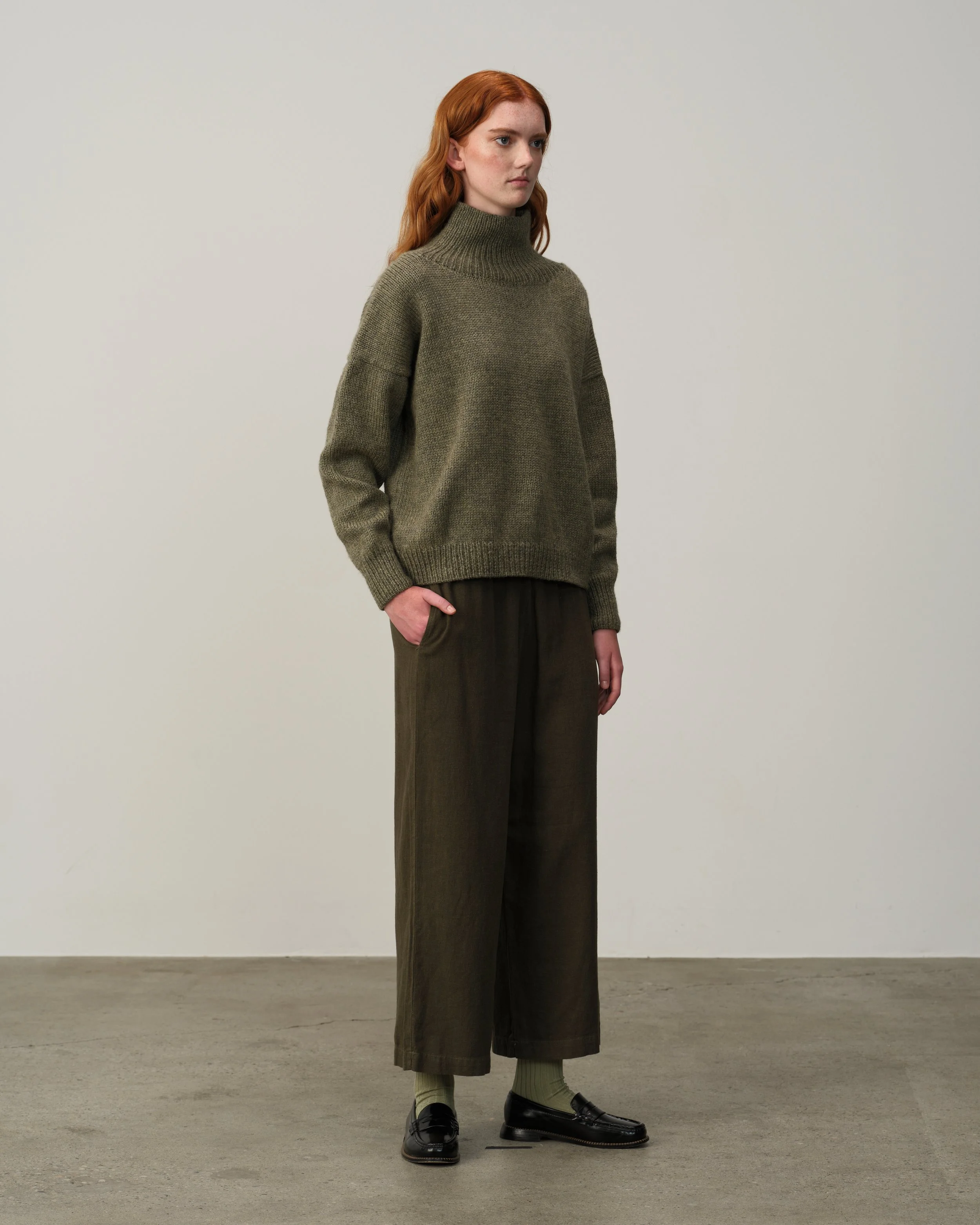 Image 1 of 10
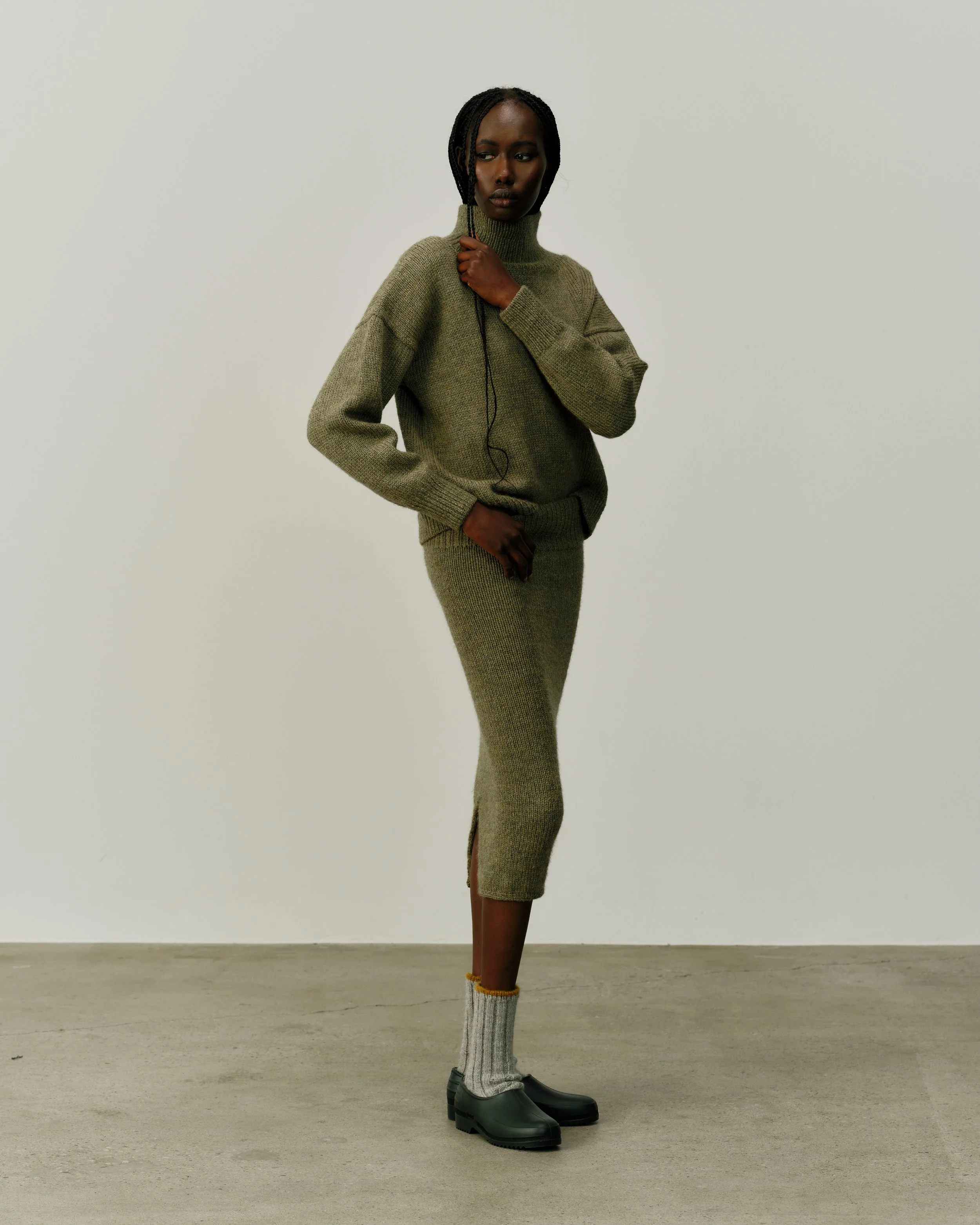 Image 2 of 10
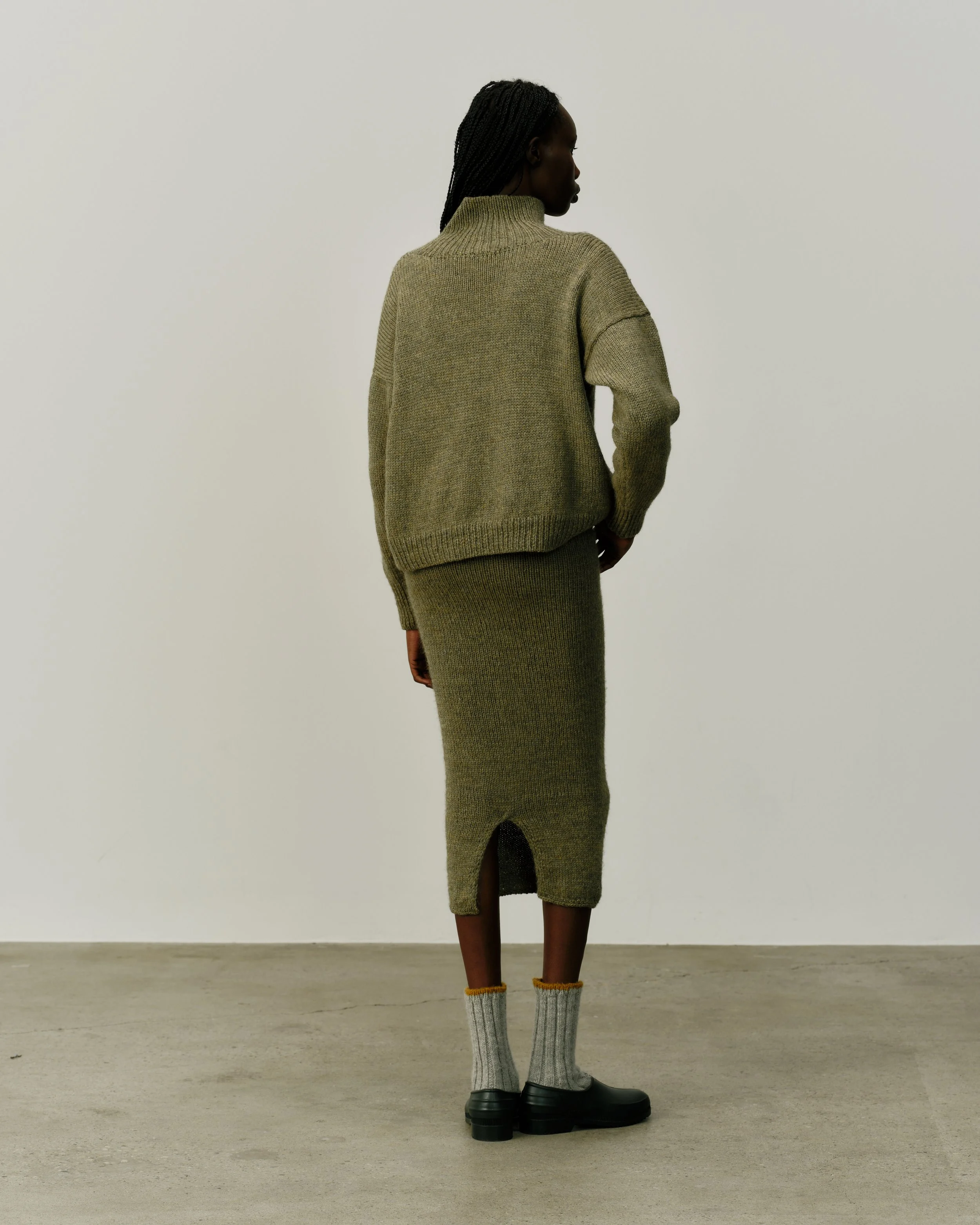 Image 3 of 10
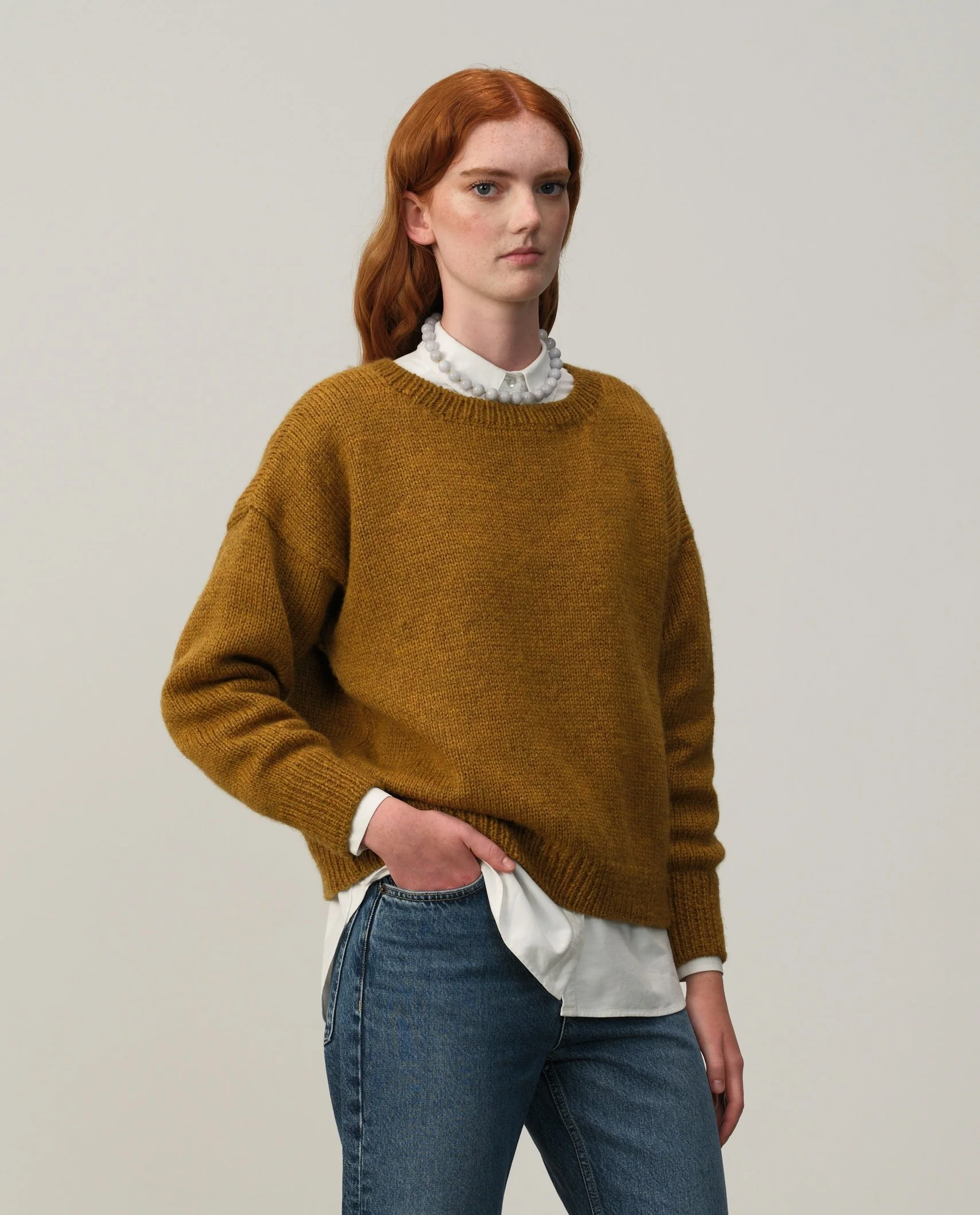 Image 4 of 10
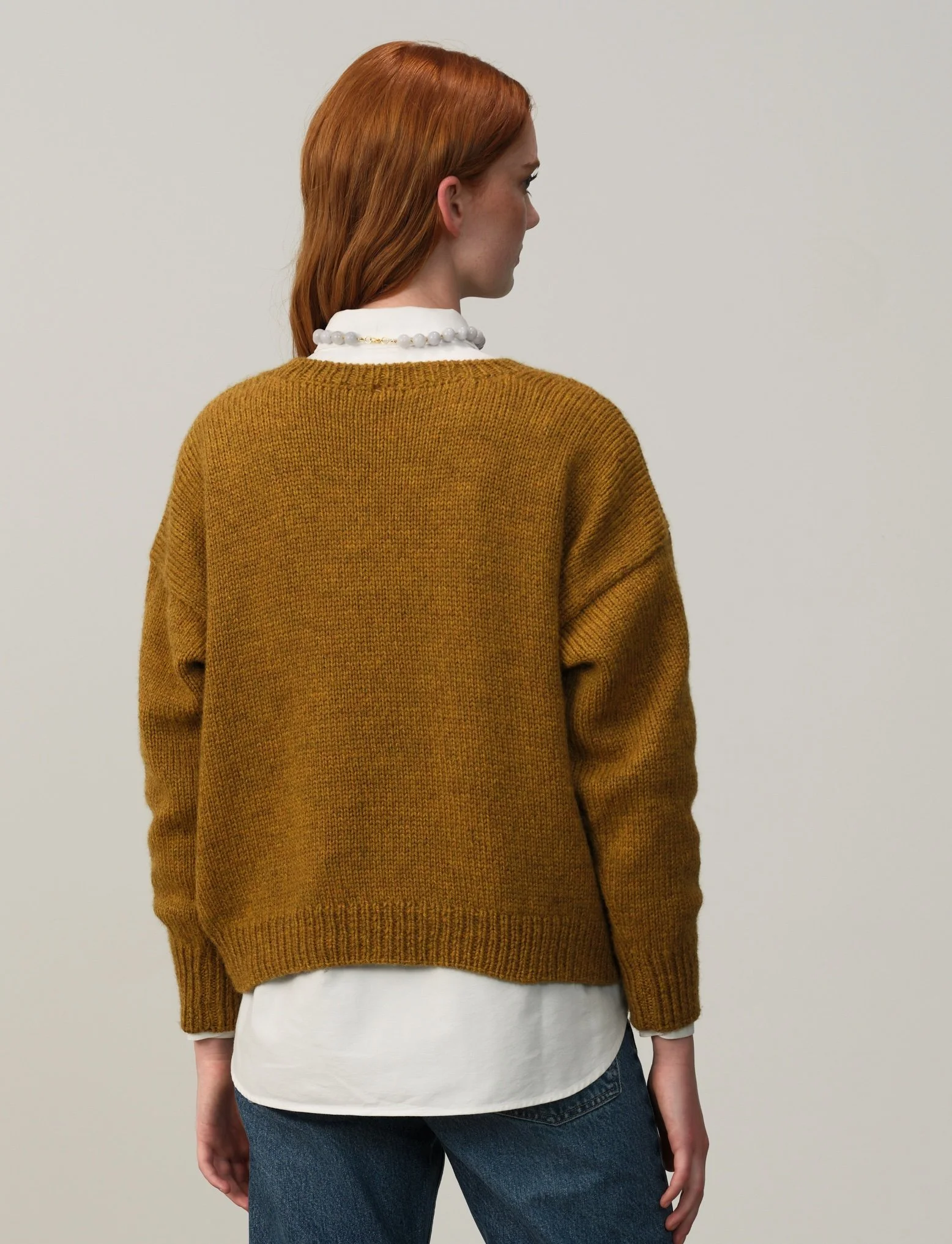 Image 5 of 10
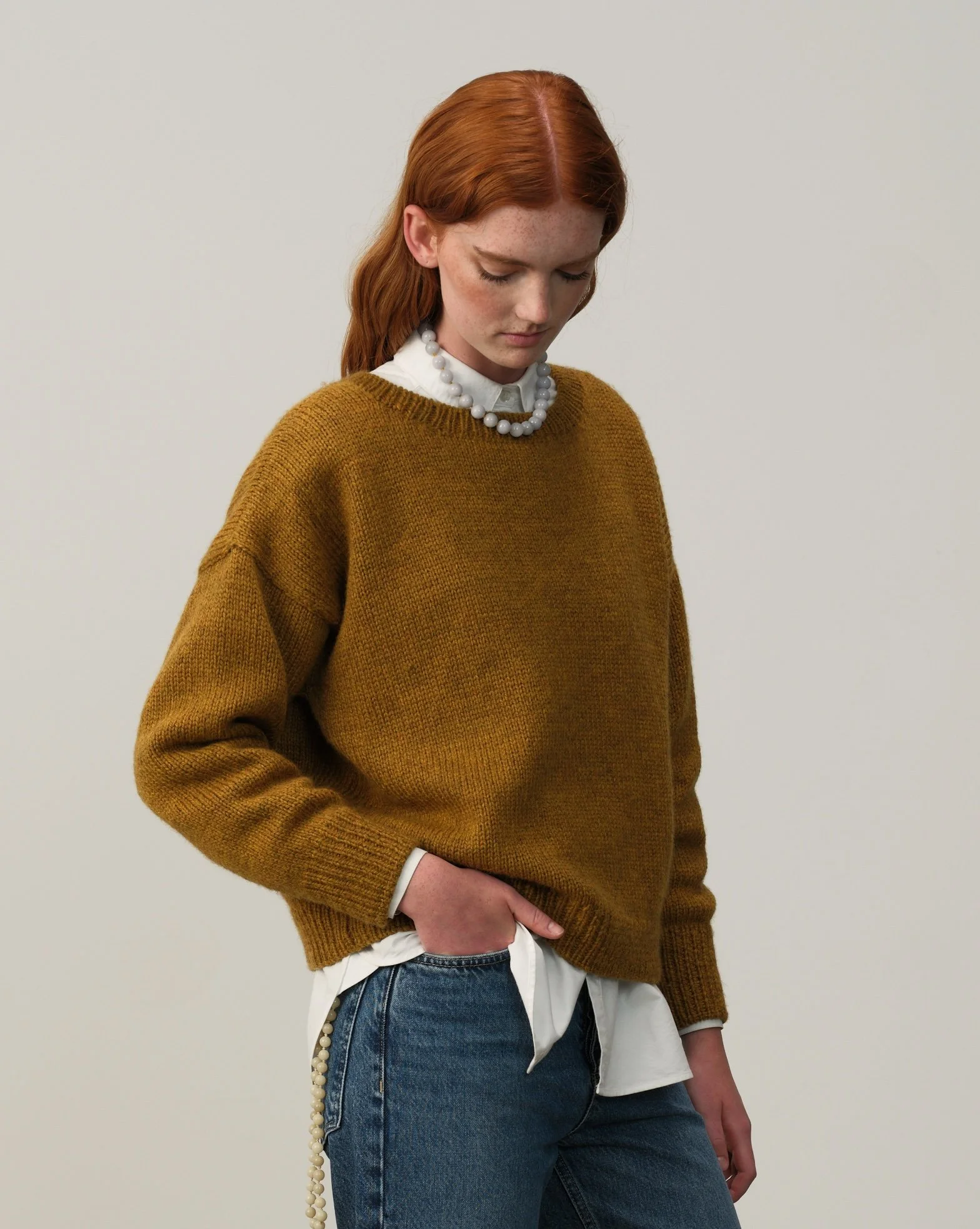 Image 6 of 10
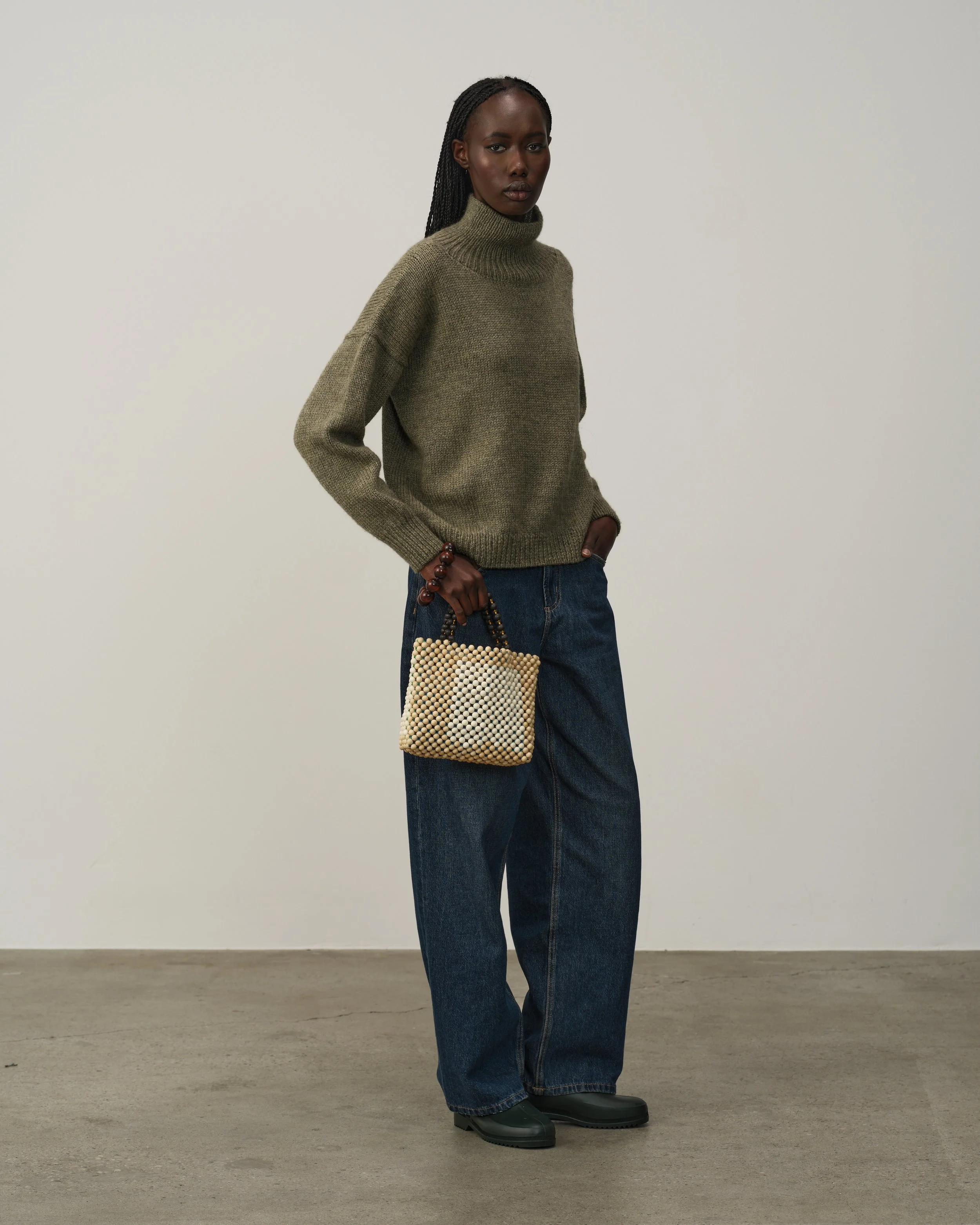 Image 7 of 10
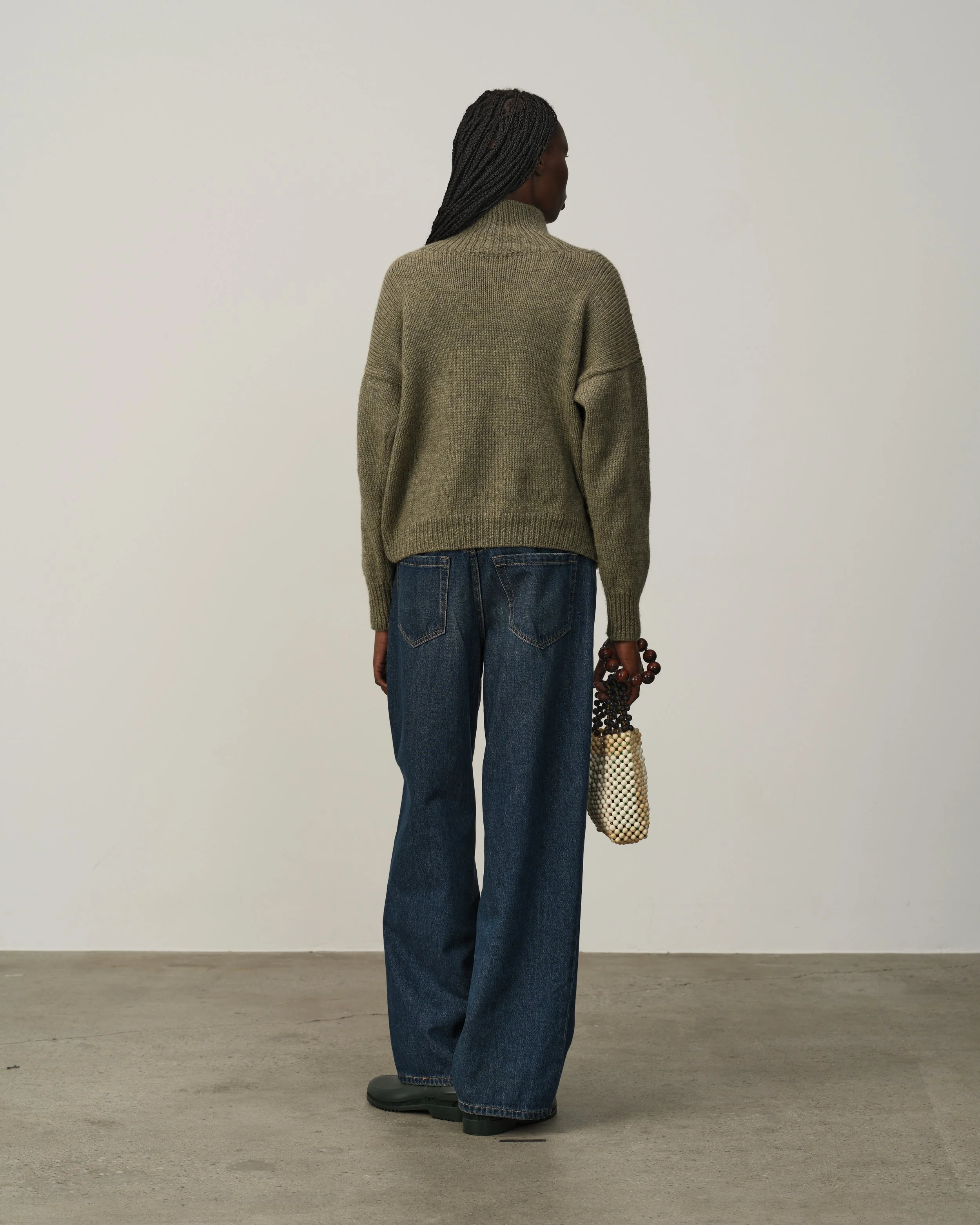 Image 8 of 10
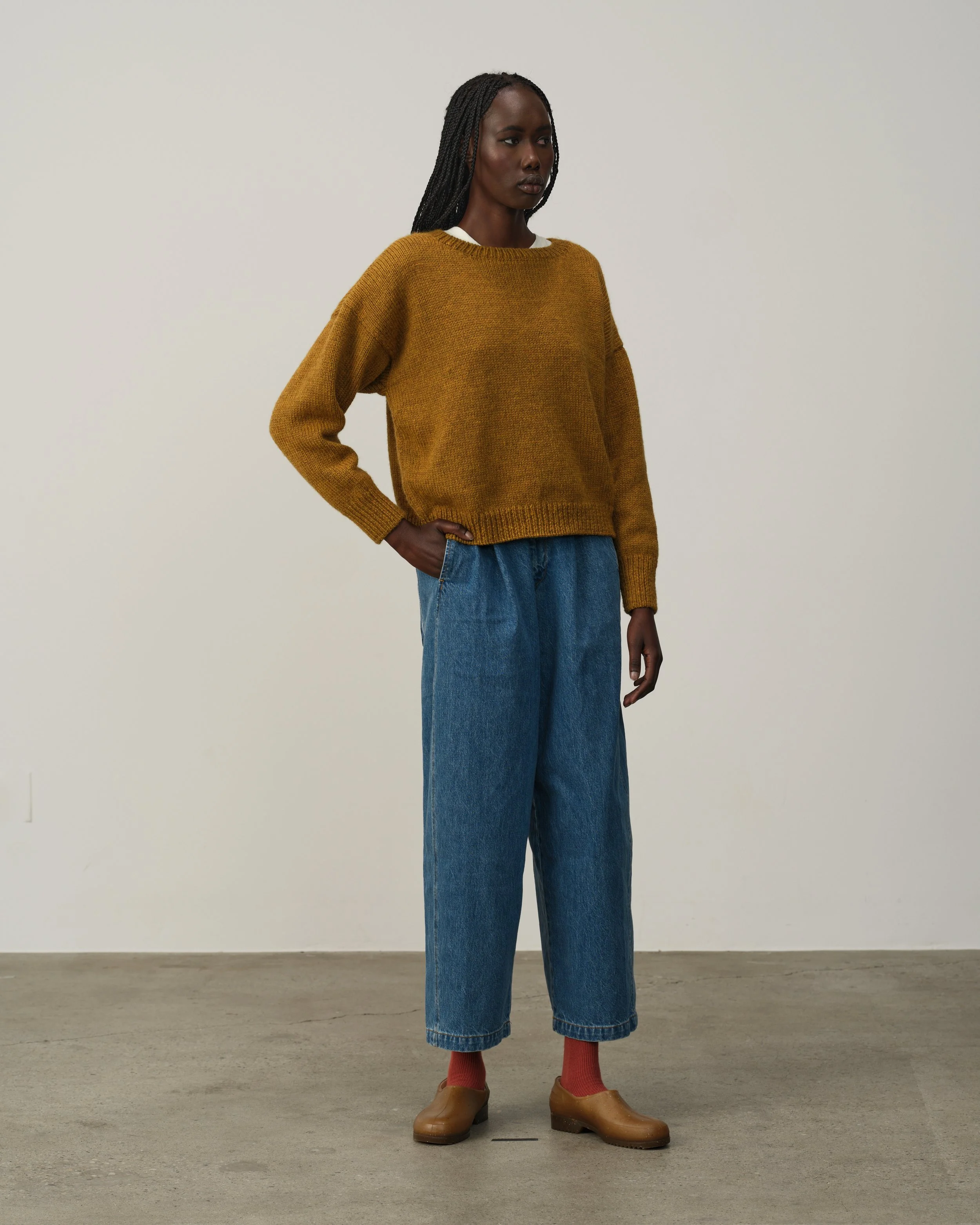 Image 9 of 10
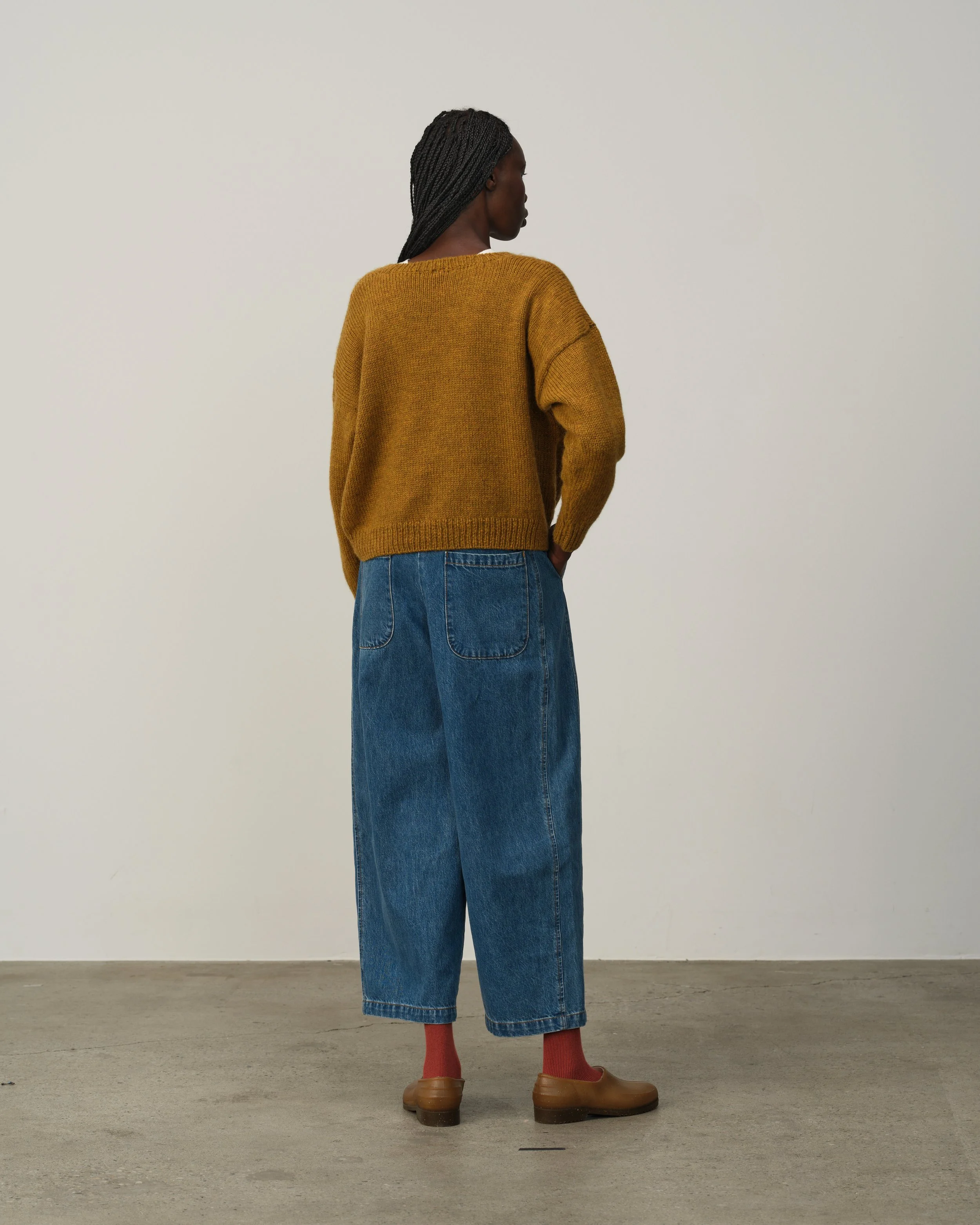 Image 10 of 10